The Government has placed financial health at the centre of Ghana’s next National Financial Inclusion and Development Strategy (NFIDS), 2027–2031, as part of efforts to ensure that access to financial services translates into improved livelihoods, economic security and wealth creation.
The new strategy will build on the progress made in expanding access to formal financial services while addressing persistent challenges affecting the ability of individuals, households and businesses to use financial products to improve their financial well-being.
Deputy Minister for Finance, Thomas Nyarko Ampem, announced this at the joint inauguration of the development process for the strategy, at the Ministry of Finance in the presence of Her Majesty Queen Máxima of the Netherlands, the United Nations Secretary-General’s Special Advocate for Financial Health, and other key stakeholders.
He said Ghana had recorded significant progress in financial inclusion, with more than eight in 10 adults owning a financial account, according to the World Bank’s Global Findex 2025. However, findings from the 2021 FinScope Survey indicated that only 22 percent of Ghanaian adults were financially healthy.
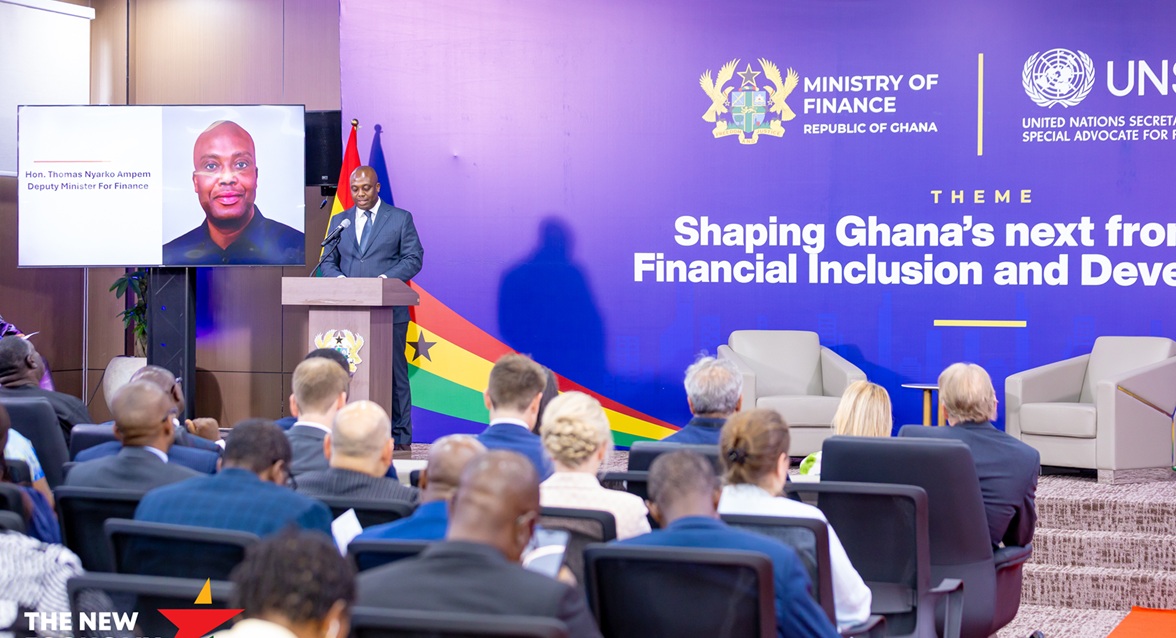
He noted that the figures underscored the need to move beyond account ownership towards ensuring that financial services provide practical benefits to citizens.
“We have become good at opening accounts. We must now become better at making accounts improve lives,” he stated.
Mr. Nyarko Ampem explained that the strategy would focus on expanding access to affordable and responsible financial services, promoting digital innovation, strengthening consumer protection and improving financial literacy and resilience.
Particular attention would be given to women, young people, farmers, informal sector workers and small businesses, who continue to face challenges accessing appropriate financial products and services.
He indicated that the government also intends to establish a Financial Inclusion Council to strengthen institutional coordination and accountability in implementing the strategy.
Additionally, a Financial Health Framework will be operationalised to assess whether households can meet their everyday financial obligations, withstand unexpected shocks, save and invest towards their future.
The Deputy Minister said the initiative aligned with the government’s broader economic transformation agenda, which seeks to build a productive and competitive economy supported by enterprise development and increased investment opportunities.
He highlighted the country’s improving macroeconomic performance, noting that the economy grew by 6.2 percent in the first half of 2026, while inflation declined from 23.8 percent in December 2024 to 5.5 percent in October 2026.
He added that ongoing financial sector reforms would extend beyond traditional banking and mobile money services to deepen capital markets and expand access to investment opportunities, including through emerging technologies such as asset tokenisation.
The strategy is being developed by a National Technical Committee comprising the Ministry of Finance, financial sector regulators and other stakeholders, with its official launch expected in the first half of 2027.
Mr. Nyarko Ampem called on financial institutions, regulators, fintech companies, insurers, pension providers and development partners to support the process.
“Our ambition is for an economy that creates opportunity, a financial system that enables participation, and a society in which more people can build secure and prosperous lives,” he said.